Leave a Message

By providing your contact information to Douglas Kunz, your personal information will be processed in accordance with Douglas Kunz's Privacy Policy. By checking the box(es) below, you expressly consent to receive marketing or promotional real estate communication from Douglas Kunz in the manner selected by you. For SMS text messages, message frequency varies. Message and data rates may apply. Consent is not a condition of purchase of any goods or services. You may opt out of receiving further communications from Douglas Kunz at any time. To opt out of receiving SMS text messages, reply STOP to unsubscribe. SMS text messaging is subject to our Terms of Use.

Thank you for your message. We will be in touch with you shortly.

The Beginner’s Guide To Escrow in Real Estate

May 8, 2018

What is Escrow and How Does It Work?

At some point in a real estate transaction, you will encounter the word “escrow.” If you're the buyer and you make an offer on a home you like, you’ll provide an earnest money deposit in the form of a check that will be placed in this escrow. But what does it really mean?

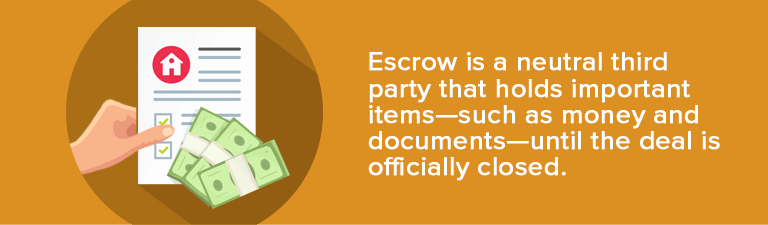
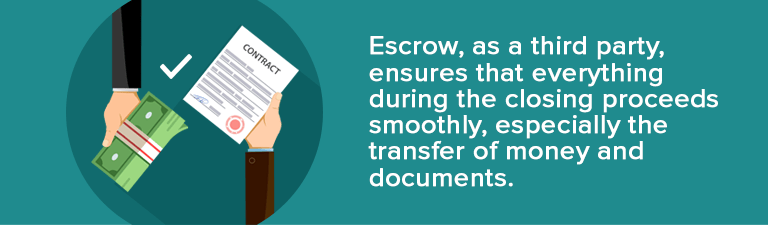
That earnest money deposit will not go directly to the seller but will be held by a neutral third party, which is escrow. It’s like a secure holding area that will hold important items—such as money and documents—until the deal is officially closed. Escrow handles the transfer of the buyer's loan documents and property taxes. The escrow officer works closely with a buyer's lender and real estate agent to make sure the title of the home is clear of liens before the transfer of ownership.

Escrow officially opens when signed agreements are given to an escrow officer, who will help ensure that the conditions of the contract and any escrow instructions are satisfied. Escrow closes when all conditions have been met and the property ownership is transferred to the buyer.

Why is Escrow Important?

  • It protects all relevant parties by making sure that no funds and property change ownership until all conditions in the agreement have been met.
  • For the buyer, the escrow can also act as a protection in case the seller failed to do the terms and conditions of the sale, such as passing the home inspection and completing important repairs to specific parts of the home. If the seller hasn't done his/her responsibilities even after the final walkthrough, he/she won’t get any of the buyer’s money until he/she has made the repairs.
  • Likewise, a seller can also benefit from escrow. If a buyer gets cold feet at the last minute and backs out of the deal with no legitimate reason, a sizeable amount of money the buyer included in their earnest money deposit will be forfeited to the seller. It serves as a decent consolation for the failure of the sale.

Escrow and Earnest Money Deposit

As mentioned, the earnest money deposit provided by the buyer will go to the escrow instead of the seller. This is because if the seller holds the deposit, he/she could use it as a hostage during the negotiation. By putting it in escrow, it serves as a safeguard to both parties just in case the deal falls through and they can't reach a final purchase and sale agreement. The earnest money check is payable to the escrow holder, who can either refund the money; apply it to the purchase price; or pass on the forfeited funds to the seller just in case the buyer fails to meet important requirements.

Who are the Key Players?

  • Escrow Officer - An escrow officer or closer (in other states) will be responsible for processing the documents and funds that allow people to buy and sell homes. In other states, it could be a licensed attorney who will handle the escrow, but they often work with a title company representative to do some of the processing. The escrow officer acts as an objective party who transfers money and paperwork between all the people involved in a real estate transaction.
  • Buyer, Seller, Lender - These parties can give instructions to be signed and delivered to the escrow officer to close the transaction.
  • Real estate agent - When a real estate professional is involved in the transaction, he/she will typically provide the escrow officer with all the information necessary to create the escrow instructions and documents.

Note: While the real estate agent may recommend a particular escrow holder, the buyer and seller still have the right to choose and use an escrow holder whom they feel will best suit their needs in the transaction.

What Are the Duties of an Escrow Officer?

  • The escrow officer is responsible for these tasks (but also not limited to):
  • Communicating with the buyer, seller, and lender in a real estate transaction.
  • Determining specific escrow requirements.
  • Adhering to the instructions set forth by all parties involved.
  • Obligated to protect all funds and documents while in its possession.
  • Preparing the important mortgage documents to complete the sales transaction.
  • Depositing and disbursing funds in accordance with the instructions.
  • Paying all authorized fees, bills, and charges.
  • If necessary, the closer will also work with escrow tax documents to ensure that all parties legally comply with state mandates.
  • Closing the escrow when all terms have been met, such as inspections, disclosures, and any other objections.
  • Providing the closing or settlement statement.

Do I Have a Role in Escrow?

  • Make sure that you carefully read and understand your escrow instructions. In case you have questions or clarifications about those instructions, ask your escrow officer.
  • As much as possible, always respond quickly to correspondence regarding the transaction as this will help ensure a timely closing.
  • Make sure to deliver your funds to escrow in an acceptable form. Depending on the procedures of your escrow company, personal checks are often not permitted or accepted. This mistake could delay the closing process! Take note of the specific instructions on how to deliver your funds. Often, the most accepted forms are bank checks and electronic bank transfers.
  • Especially for buyers, carefully review and examine all of your closing documents, specifically your closing statement.
  • Once the transaction is completed, safely store your closing statement and other escrow documents for tax purposes.

Bottom Line

No matter how bad and confusing it sounds, escrow only guarantees that all parties—especially the buyer and seller—will be kept safe and secure as they move forward and complete the real estate transaction.
Recent Blog Posts

Showcase Worthy Home on an Idyllic Tree-Lined Street in one of South Pasadena’s Most Desirable Neighborhoods
Here's Why Having A Good Driveway Matters When Selling Your Home

June 10, 2026

When it comes to curb appeal, homeowners often overlook the condition and appearance of their driveway.

A white kitchen with a stove and a sink. The kitchen has stainless steel appliances and granite countertops.
Here's One Thing Most Home Buyers Forget to Budget For: Landscaping

May 20, 2026

With its fresh lawn, lovely trees, and colorful flower beds and gardens, can absolutely boost curb appeal and home value.

A cozy living room with a light-colored couch, pillow, blanket, coffee table, side table, hardwood flooring, and white walls.
A Simple Guide To Choosing The Ideal Paint Color For Your Space

April 26, 2026

Deciding to do a new paint job may sound simple until reality hits: choosing the ideal paint color can be overwhelming.

Condos For Sale In Silverleaf, AZ
Understanding Cash to Close When Purchasing A Home

April 14, 2026

There are dozens of smaller fees, expenses, credits, and adjustments in the real estate transaction that you need to account for.

Easy and Inexpensive Bathroom Updates You Can Make Before Selling Your Home

March 26, 2026

Hanging thick, hotel-quality hand towels is a quick and easy way to give your bathroom a luxurious feel that appeals to many buyers.

Where to Keep Your Down Payment Savings For Your Dream Home

March 15, 2026

It may feel like an overwhelming task, a goal that takes a considerable amount of time and effort to accomplish.

A modern kitchen with a large island, wood herringbone floors, and light wood cabinets, featuring an oversized window.
5 Ways Your Neighbors Can Affect Your Home's Value

February 22, 2026

Studies also show that values of properties near where convicted criminals live drop by up to 17 percent due to stigma and safety concerns.

A modern dining room with a black table and chairs. A vase with plants sits in the center of the table.
From Date Nights to Mortgage Payments: Tips for Couples Buying Their First Home Together

February 8, 2026

With Valentine's Day just around the corner, it’s not only love that fills the air, but a renewed sense of commitment among couples.

A modern kitchen with dark cabinets, marble countertops, open shelves, and a stainless steel stove beneath pendant lights.
7 Simple But Effective Habits For A Cleaner and Tidier Home All Year

January 19, 2026

We’ve rounded up small but impactful habits to start now, and which you can actually stick to for the long term.

WE'LL MEET YOU WHERE YOU ARE

Our team brings deep Titusville expertise, honest guidance, and a genuine investment in every client outcome. We are not just here to close deals — we are here to help you make one of the biggest decisions of your life with confidence.