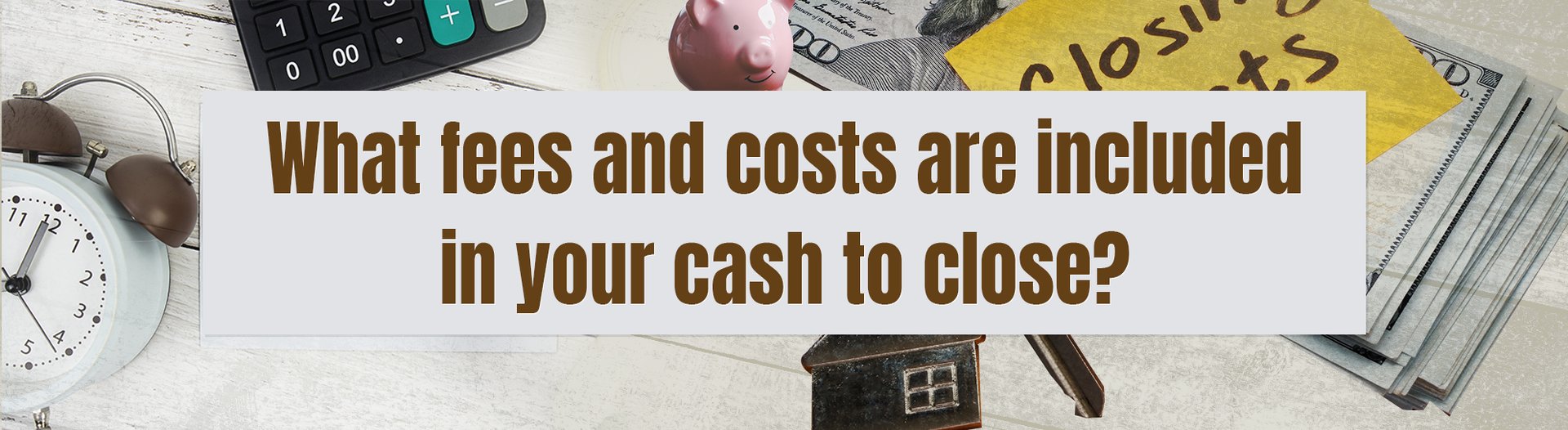
Understanding Cash to Close When Purchasing A Home
April 14, 2026
April 14, 2026
Even before starting your home-buying journey, you're probably already aware that the numbers aren’t just about the home’s purchase price and your down payment. There are dozens of smaller fees, expenses, credits, and adjustments in the real estate transaction that you need to account for.
This is where the term “cash to close” comes into play. Cash to close is the amount you need to bring on closing day to finalize the sale, and is a crucial aspect of the home-buying process.
In this blog, learn more about cash to close, how it differs from closing costs, and what it includes. Understanding the basics of how much cash to close you need will ensure that you can prepare the funds in advance for a smooth, stress-free closing.
Cash to close, also known as funds to close, is the total amount of money a home buyer needs to bring to the closing table to finalize a real estate purchase. You can think of it as the grand total you'll need to pay on closing day to officially become a homeowner.
The funds typically include your down payment and closing costs, prepaid expenses such as property taxes and homeowners’ insurance, and any escrow deposits you’ve made to set up your mortgage account. On the other hand, any credits you’ve already paid will be subtracted from your total.
Knowing your cash to close in advance is crucial because you need to prepare the necessary funds at closing. You'll find the exact amount you owed on your Closing Disclosure in the section labeled “Calculating Cash to Close,” which your mortgage lender should provide you at least three business days before closing. This document itemizes all your closing costs and gives you a detailed breakdown of how your total amount was reached, and how it differs from the estimate you received at the start of the mortgage process.
As you go through your home-buying journey, you'll often encounter the terms “closing costs” and “cash to close.” Let’s go over these two different terms:
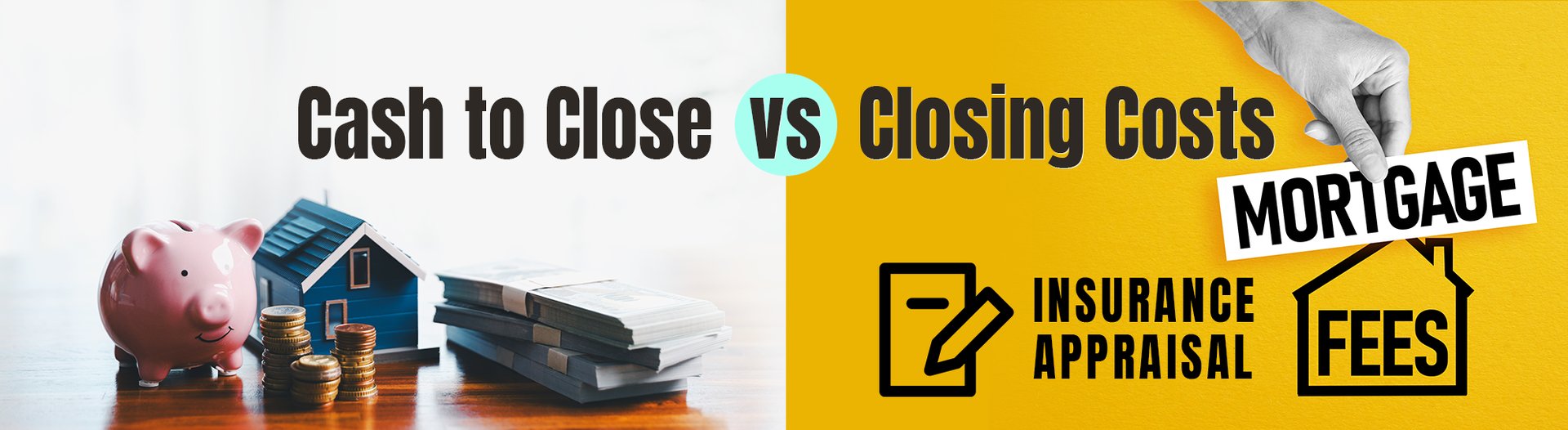
To put it simply, closing costs are just one part of your cash to close, and these terms are not to be used interchangeably.
Your cash to close is made up of several parts, and understanding each item helps you see where your money is going and where you can squeeze in a little savings. To break it down a little further, here are the typical costs that make up the cash to close amount:
1. Down payment - This is the amount you pay upfront, usually a percentage of the home's purchase price, while the rest is covered by your loan. It’s usually the largest share of your total cash to close. For conventional loans, it's anywhere from 3% to 20% of the total home cost, while FHA loans can be as low as 3.5% of the purchase price. Meanwhile, some government-backed programs, such as VA or USDA loans, allow eligible buyers to purchase a home with zero down payment.
2. Closing costs - As mentioned above, these are one-time fees associated with finalizing the home purchase, typically totaling between 2% and 5% of the home’s purchase price. These costs may vary depending on the loan type, the lender, and the state where you’re purchasing. Some of the most common closing costs for home buyers include:
Appraisal fee
Loan origination fee
Title search and title insurance
Transfer taxes
Credit report fee
Recording fees
Attorney fees (in some states)
Homeowners association (HOA) fees (if the home is within an HOA)
Other administrative expenses
3. Prepaid expenses - These are homeownership expenses that have been covered by the seller for the remainder of the year. Your lender will usually hold the funds in an escrow account until the applicable payments are made. Most of these fees will vary depending on your property, location, and the year you close, including prorated property taxes, first year of homeowners' insurance, mortgage interest, and HOA fees. These costs make sure certain bills are current when you move in, and any unused expenses will be reimbursed to the seller.
4. Deposits and credits - Any money you’ve put for a down payment, closing costs, or other funds applied to your home purchase will be shown as deductions to your cash to close. This may also include any appraisal or inspection fees you’ve paid out of pocket, as well as credits you receive from the seller or lender. Remember to keep records so you can discuss any discrepancies with your lender and lower what you need to pay on closing day.
To figure out or estimate your cash to close amount, here’s a simple equation most lenders use:
💰Cash to Close = Down payment + Closing costs + Prepaid expenses – Credits and deposits
Aside from your down payment and closing costs, understanding your estimated cash to close and everything it entails is a key part of your home-buying journey. Staying on top of these details is crucial so you won't be caught off guard when you receive your closing disclosure and see the amount you owe on closing day.
Ample preparation, including setting aside enough money and anticipating the total costs of homeownership, while having a trusted real estate agent by your side, will ensure your real estate journey is smoother and easier. This way, you can focus on closing day and celebrate your success of finally becoming a homeowner.
September 17, 2026

September 10, 2026
September 3, 2026

Military Relocation
Douglas Kunz | August 31, 2026
Everything veterans need to know about entitlement, funding fees, and the home-buying process — explained by a fellow service member.

August 27, 2026
August 20, 2026
August 13, 2026
August 13, 2026
August 13, 2026
Our team brings deep Titusville expertise, honest guidance, and a genuine investment in every client outcome. We are not just here to close deals — we are here to help you make one of the biggest decisions of your life with confidence.
In The Home Zone Realty | Douglas Kunz Team
2323 S Washington Ave Ste 211 Titusville, FL 32780