How To Factor Your Commute Time In Your Home Buying Decision
January 29, 2018
January 29, 2018
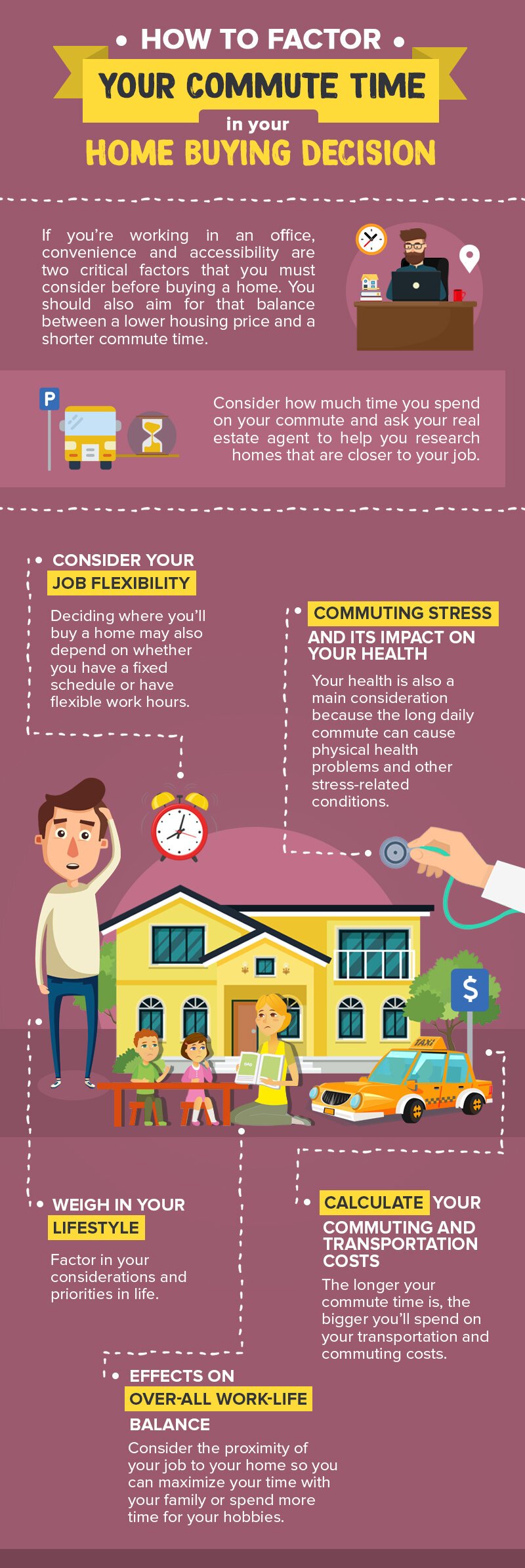
When looking for that perfect home, many factors should be put into consideration. There's price, accessibility, proximity to a great school district, lower taxes, and others. However, if you’re working in an office, convenience and accessibility are two of the most critical factors you must consider before buying a home. During your home search, you should aim for that balance between a lower housing price and a shorter commute time — unless you’d want to waste countless hours in dreadful traffic every week that should rather be spent with your family or pursuing your hobbies.
According to the Census Bureau, the average commute time to work in the US is 25.4 minutes. But commute times also vary widely depending on location. Some of the metro areas with the longest commute time include New York City, Los Angeles, and Boston, which are obviously highly-populated areas. Apparently, metros which have the shortest commute times are those that have less population density and road congestion.
In a Trulia Report, most people said they would like to live closer to work because commuting times keep getting longer each year. Roughly 16% of working Americans picked either a “short commute to work” or “nearby public transportation” as the most important quality of the next neighborhood they would call home.
Before deciding where you want to live, factor your commute into your home buying process. While doing your house-hunting, it would be best to ask your real estate agent to do some research on homes that are closer to your job. Your realtor will help you weigh the pros and cons that can help you make an informed decision on what would be the best home — and commute — for you.
Here's how to factor in your commute time when deciding to buy your dream home:
Transportation costs include how much you spend when you drive a car to and from work — including gasoline, vehicle maintenance, insurance, toll fees, parking, and others. For many Americans, gas is their biggest commuting expense. Meanwhile, your commuting costs amount to how much you spend on public transit, carpool, and others.
According to the Citi ThankYou Premier Commuter Index, the average cost of an American commute is $2,600 a year. Many home buyers don’t even realize how expensive their transportation expenditures can be if they fall in love with a house that takes a long commute to their job. Commuting costs are gradually rising, as well as the price of gas. And the longer your commute time is, the bigger you’ll spend on your travel costs. It’s important to factor in the number of hours you’ll spend in your commute, then add in your transportation and commuting costs.
Deciding where you’ll buy a home may also depend on your job flexibility. If you have a fixed 9-5 job, then accessibility is a crucial factor. For people who are lucky enough to have flexible work hours, they may adjust their work schedule to avoid the rush hour traffic.
Likewise, telecommuting has now become a new option for many employees. In the 2017 State of Telecommuting in the US Employee Workforce report, roughly 3.9 million employees are now able to telecommute or work from home at least half of time. Those who have that luxury may be inclined to buy a house in the suburbs that require a longer commute.
It’s important to factor in your considerations and priorities in life. Millennials who want access to the nightlife, restaurants and retail centers, or outdoor parks, are most likely to buy in urban areas. They place a high emphasis on both affordability and convenience.
But for those who have a family and are raising young children, they would likely want a short commute so they can spend more time with them. In the NAR Home Buyer and Seller Generational Trends Report 2017, the neighborhood choices of buyers aged 37 to 51 (which make up 28% of recent home buyers) are driven by their convenience to their job and the quality and convenience of school districts.
Your health is also a main consideration in relation to your commute time. Recent studies have established that longer commute contributes to work-related stress conditions. The long daily commute can cause both physical and mental health problems, like higher cholesterol and blood sugar levels, neck and back problems, and even anxiety and depression. It also leads to less exercise and less sleep and can be the reason for poor food choices and habits.
Some people won’t mind the long commute because it gives them time to do things they weren’t able to do during normal hours, like listening to new music, podcasts or even watching videos. However, it may cause a wear and tear in the person in the long run.
Longer commute time may also have an impact on family and marriage and can cause marital problems. Especially for those with a young family or are single parents, you need to carefully consider the proximity of your job to your home so you can maximize your time with your children. A longer commute may also add financial burdens to the family, especially if more members are also commuting.
Prospective homeowners may want to carefully consider their commute time in their home buying decision. Because not only does commuting costs money, but it also sacrifices a lot of time that would be better spent with family or friends, or be used to improve one’s self that contributes to greater work-life balance.
September 17, 2026

September 10, 2026

September 3, 2026

Military Relocation
Douglas Kunz | August 31, 2026
Everything veterans need to know about entitlement, funding fees, and the home-buying process — explained by a fellow service member.

August 27, 2026
August 20, 2026
August 13, 2026
August 13, 2026

August 13, 2026
Our team brings deep Titusville expertise, honest guidance, and a genuine investment in every client outcome. We are not just here to close deals — we are here to help you make one of the biggest decisions of your life with confidence.

In The Home Zone Realty | Douglas Kunz Team
2323 S Washington Ave Ste 211 Titusville, FL 32780