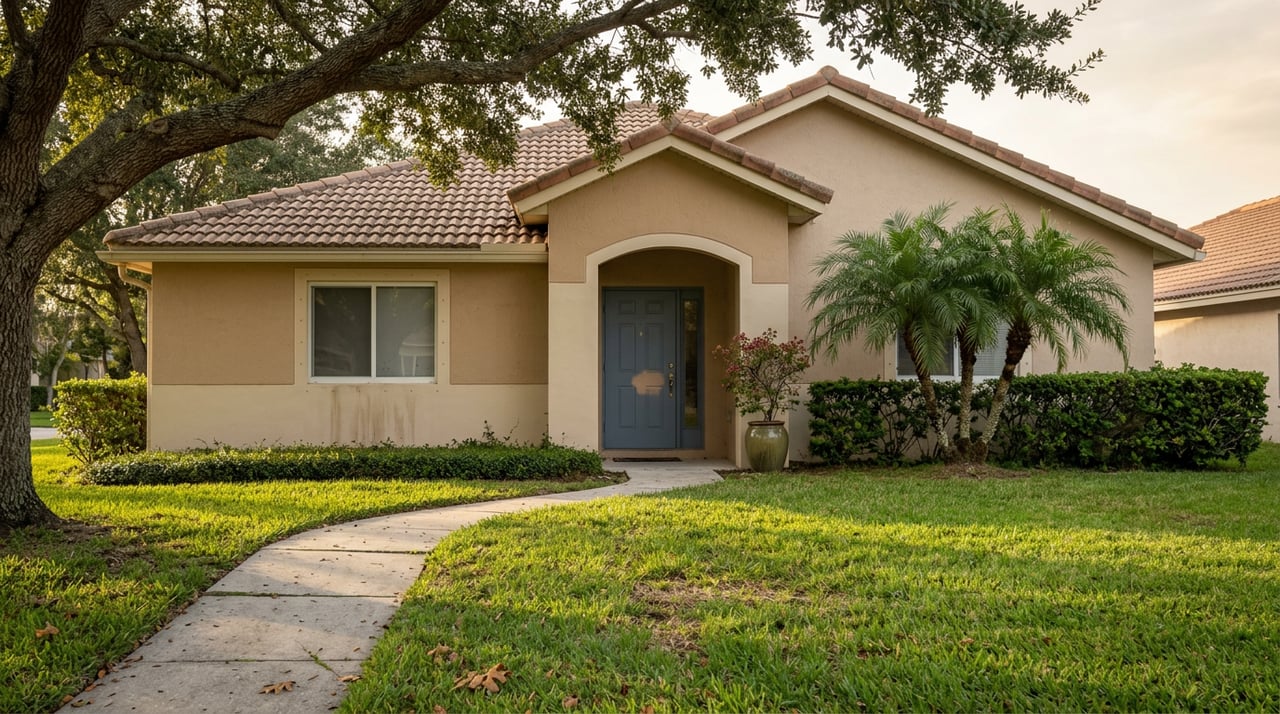
Melbourne, FL's Median Home Price Depends on Which Melbourne You Mean
August 13, 2026
August 13, 2026
Pull up four different housing data sites for Melbourne, Florida on the same afternoon and you will get four different median prices. Redfin's spring 2026 window put the median sale price at $310,000. Houzeo's June 2026 numbers showed $408,000. Movoto's April figure was $419,700 in median list price. Zillow's mid-2026 typical home value landed at $376,047. None of these sites made an error. They are measuring the same city and arriving at numbers that differ by more than $100,000.
If you are comparing Melbourne against other Space Coast towns, or comparing neighborhoods inside Melbourne itself, that spread is the actual story. A single median price for a city this size is not a fact. It is an average of several very different housing markets that happen to share a mailing address, and the mix of what sold in any given month can swing the headline number without a single home changing in value.
Part of the gap is mechanical. Some platforms report list price, others report closed sale price, and those two numbers move on different schedules. Movoto's $419,700 is what sellers asked for in April 2026. Redfin's $310,000 reflects what buyers actually paid over the three months ending in May 2026. A market where 782 homes closed in June 2026, up 41.67% from a year earlier according to Houzeo's data, is a market where the mix of what's selling can shift fast, and price gets dragged around by which pocket of the city is moving that month.
The bigger part of the gap is geography. Melbourne isn't one housing product. It's a mainland grid of older single-family neighborhoods, a cluster of golf-course communities built from the late 1970s through the early 2000s, a newer master-planned district with its own fee structure, and a barrier island separated from the mainland by a bridge. Blend those together into one median and you get a number that describes none of them accurately.
Redfin's neighborhood-level breakdown, pulled from the same spring 2026 snapshot that showed Brisbane at Suntree's own median at $820,000 that March, makes the split visible. The general Melbourne mainland market showed a median sale price of $318,750. A few miles inland, Suntree came in at $412,000. Cross into the gated Viera West section and the median jumped to $605,000. Baytree, the gated golf enclave inside Suntree, showed $799,900. Cross the causeway to Indialantic on the barrier island and the same snapshot showed a median of $775,000, more than double the mainland number, for homes a short drive apart.
Each of those numbers comes with its own cost structure, not just its own price tag:
Suntree is unincorporated, built out mostly from the late 1970s through the early 2000s, and organized around the 36-hole Suntree Country Club, with mature oak canopy that newer subdivisions don't have yet. The community carries a modest master HOA, historically around $245 a year, with additional sub-association dues depending on the specific section.
Viera, just north, is newer construction with a different fee logic entirely. Beyond a standard HOA, many Viera neighborhoods sit inside a Community Development District, which means an additional CDD assessment shows up on the annual property tax bill to fund the roads and water infrastructure the developer built. Two homes at the same price point in Suntree and Viera can carry meaningfully different monthly costs once that CDD line item is added in.
Indialantic and Melbourne Beach, across the Indian River Lagoon on the barrier island, trade in a different currency again. Coastal condos and homes there carry higher association dues, often exceeding $800 a month, driven by Florida's stricter structural reserve and master insurance requirements for coastal buildings.
Historic Downtown Melbourne is its own case. The district sits under C-3 zoning, which allows buildings up to eight floors or 96 feet with tax abatements and impact fee reductions for qualifying projects, and the city has already shown developers will use that allowance. The Melbourne City Council approved a $24 million Downtown Core Streetscape Project this spring, rebuilding East New Haven Avenue, Municipal Lane, and Melbourne Court with new sidewalks, parking, and stormwater infrastructure, funded through the Community Redevelopment Area ahead of its 2042 sunset. That kind of public investment in a walkable historic core, layered on top of zoning that already allows density, is a different growth story than a mainland subdivision or a golf-course enclave, and it shows up as a different kind of buyer interest.
None of this variation is random. Melbourne's job base gives all of these submarkets a demand floor at once. L3Harris is headquartered on W NASA Blvd, Northrop Grumman and Embraer both operate facilities near the airport, and Melbourne Orlando International Airport sits inside the city limits rather than requiring a longer regional drive. That employment concentration is why a mainland starter home and a barrier island estate can both hold value in the same year even as their price tags move in opposite directions.
If the median price is the wrong number to anchor on, what should a buyer or seller watch instead? Houzeo's June 2026 data points to a better one: 70.63% of Melbourne listings took a price reduction before selling, up from 69.49% a year earlier. Combine that with a 59-day average time on market and a 97.7% sale-to-list ratio, and the picture is a market where sellers are testing higher asking prices and buyers are pushing back hard enough that most sellers eventually concede.
That's a more useful read than any single median. A rising price-reduction rate means initial list prices are running ahead of what the market will actually pay, which is exactly the kind of gap a buyer can use in negotiation. With supply sitting around 1.16 months by that same measure, well below the 5 to 6 months usually considered a balanced market, sellers still have real leverage on well-priced, well-maintained homes. The two facts together describe a market rewarding accurate pricing and punishing guesswork, which is a very different story than "prices are up" or "prices are down."
If you're cross-shopping Melbourne against Suntree, Viera, or the barrier island towns, the headline median for "Melbourne" won't tell you what you need to know. A more useful approach:
Is Melbourne's median home price going up or down in 2026? Depending on the source and the month, you'll find both answers, because the reports are measuring different mixes of submarkets and different price stages (list versus closed). The more reliable read is that the citywide market has moved from the bidding-war conditions of prior years into a more balanced one, with the real variation happening between neighborhoods rather than across the year.
What's the real difference between Melbourne and Melbourne Beach? Melbourne is the mainland city. Melbourne Beach and Indialantic sit across the Indian River Lagoon on the barrier island, reached by causeway bridges, and their home prices reflect direct or near-direct ocean access rather than mainland lot sizes.
Do I need to budget for HOA or CDD fees on top of the purchase price? It depends entirely on which pocket of Melbourne you're looking at. Some mainland and older Suntree-area neighborhoods carry little to no HOA. Newer Viera communities often layer a CDD assessment onto the property tax bill in addition to HOA dues, so the same purchase price can carry a different real monthly cost depending on where the home sits.
If you're trying to figure out which version of Melbourne actually fits your budget and your lifestyle, that's exactly the kind of question a local conversation answers faster than another spreadsheet of averages. In The Home Zone Realty works these submarkets every week, from the historic downtown core to Suntree's golf-course streets to the barrier island. Reach out for a free home valuation and a straight answer about what your number actually means in today's market.
September 24, 2026
September 17, 2026

September 10, 2026
September 3, 2026

Military Relocation
Douglas Kunz | August 31, 2026
Everything veterans need to know about entitlement, funding fees, and the home-buying process — explained by a fellow service member.
August 27, 2026
August 20, 2026
August 13, 2026
August 13, 2026
Our team brings deep Titusville expertise, honest guidance, and a genuine investment in every client outcome. We are not just here to close deals — we are here to help you make one of the biggest decisions of your life with confidence.
In The Home Zone Realty | Douglas Kunz Team
2323 S Washington Ave Ste 211 Titusville, FL 32780