Homeowner's Insurance Policy for Wildfires: What to Know
December 28, 2018
December 28, 2018
The recent catastrophic wildfires in California have been beyond devastating. These violent infernos destroyed thousands of properties and structures and displaced hundreds of thousands of people living in the affected areas.
But if there's one takeaway from this widespread fire damage, it’s that homeowners and renters alike should be sure their insurance policies are up to date, and that they can get enough coverage to rebuild their home after a catastrophe.
So whether you live in the Golden State, on the West Coast, or anywhere else in the country, here are some key points about your policy in case you need to make an insurance claim after wildfire damage:
Your standard homeowner's insurance policy will cover damages to your home from a wildfire, especially those caused by fire and smoke. It may also include the repair and cleaning of smoke-damaged furniture, water damage from firefighting efforts, as well as debris removal.
Depending on the kind of policy you have and whether you live in a high-risk zone or not, you may have coverage for:
Keep in mind that for personal belongings like jewelry, you may need to purchase additional coverage to protect them since your standard policy may offer lower coverage limits. If your car has also been damaged or destroyed by wildfire, it is typically covered under the optional “comprehensive” portion of your automobile insurance policy.
Based on your insurance policy, your house and its contents may be insured for either their cash value or their replacement value. The actual cash value is the depreciated value of your possessions at the time of the loss. In this settlement, your items will be replaced by their current, depreciated value.
On the other hand, replacement value will provide you with enough money to replace your lost items. And although you will pay more in premiums, it's often worth it because it can help you go back on the same position you were before the loss.
Remember that you shouldn't only focus on the replacement costs of your home and its contents. You should also check your homeowner’s policy for your Loss of Use coverage limits. Loss of Use coverage provides living expenses if your home is deemed uninhabitable as the result of a disaster such as fire or water.
Because it will take time to rebuild or repair your home, loss of use covers expenses for temporary residence, moving costs, transportation, and commuting expenses, among others. This key provision is sometimes called Coverage D and in most policies or insurers, it is usually limited to a certain amount and for a specific time period.
In case of disasters such as a wildfire, homeowners need to be sure that their policies have strong loss of use provisions. It’s a common mistake for many because they purchase their coverage based on cost and not the actual coverage. So once a disaster strikes, they’re surprised to find out that their temporary living costs are only partially covered. Experts suggest that homeowners review their Loss of Use coverage limits before they suffer a loss so they can be comfortable while they’re on their way to recovery.
The Loss of Use provision is only limited to a specific time period, which can pose a new challenge for affected homeowners since it takes time to rebuild. The length of coverage also varies by state. In California, the current law allows for 24 months of loss of use. The good news is that it will increase to 36 months starting January 2019. Some other states, however, limit the loss of use to only 12 months.
For many displaced homeowners, the 24 months of coverage may not be enough to cover the actual time needed to rebuild. Most insurance policies also do not consider outside influences that can make it difficult for these homeowners to be efficient with rebuilding.
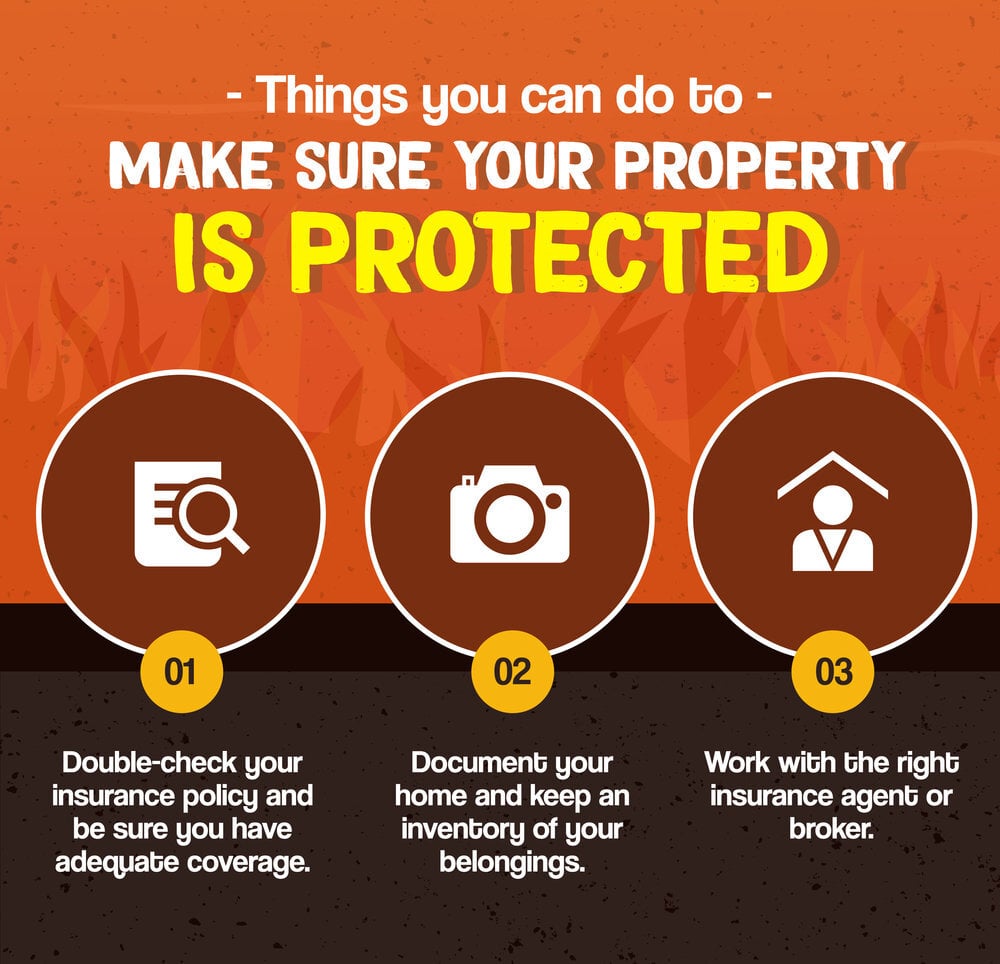
1. Double-check your insurance policy and be sure you have adequate coverage. Homeowners and renters alike, especially those who live in areas at risk of wildfires, should make sure their coverage is adequate and up to date. Review the fine print of your insurance policy and make sure nothing sneaky has made its way into your policy.
You can also purchase additional coverage for code upgrades, which will help cover the cost of bringing your new home up to the latest building standards. This will protect you in case rules have changed for electrical systems or insulation since the year your house was built.
2. Document your home and keep an inventory of your belongings. Take pictures and videos of your home and your possessions through your smartphone, then keep them on a cloud-based storage platform so you can access them anywhere. In case your possessions were ruined by fire, you can use the images as evidence if your insurer disputes something in your claim.
In case your area has been affected by wildfires and you have to evacuate, save receipts from hotel rooms, food, or rentals. These additional living expenses could be covered by your insurance policy.
3. Work with the right insurance agent or broker. Working with the right professionals can make a big difference even before a disaster strikes. They can walk you through the provisions of your insurance policy and explain why you may need to pay additional premiums, especially if you're living in a high-risk area.
September 17, 2026

September 10, 2026

September 3, 2026

Military Relocation
Douglas Kunz | August 31, 2026
Everything veterans need to know about entitlement, funding fees, and the home-buying process — explained by a fellow service member.
August 27, 2026
August 20, 2026
August 13, 2026
August 13, 2026
August 13, 2026
Our team brings deep Titusville expertise, honest guidance, and a genuine investment in every client outcome. We are not just here to close deals — we are here to help you make one of the biggest decisions of your life with confidence.
In The Home Zone Realty | Douglas Kunz Team
2323 S Washington Ave Ste 211 Titusville, FL 32780