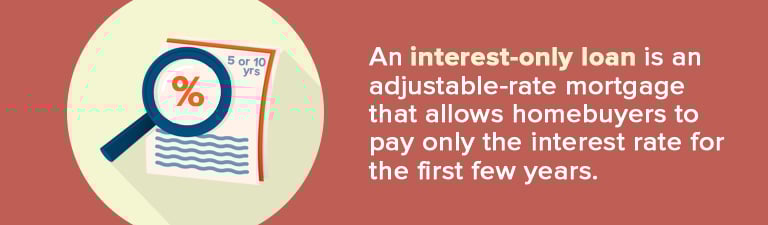
What Is An Interest-Only Loan And Who Is It For?
April 11, 2018
April 11, 2018
Are you considering buying a house with an interest-only loan? We rounded up the 5 most common questions about this type of loan and came up with the best answers from the experts.
The interest-only period typically runs for 5 years (10 years max), after which the loan converts to the normal principal and interest repayments. However, borrowers are also given the option to pay the balloon (principal owed) as a bulk payment.
During the interest-only period, monthly payments are significantly lower than if you were approved for a traditional amortizing loan.
To understand how an interest-only loan works, keep these definitions in mind:
Payments for conventional mortgages combine the cost of the principal and the interest for every payment, while payments for interest-only loans include exactly what the loan says: interest ONLY.
Monthly payments on interest-only loans are relatively low since the principal is excluded during the loan term. Borrowers will then have to start paying the principal interest once the interest-only term expires, which is usually after 5 to 10 years. This means that higher monthly payments will still occur after the interest-only period.
The calculation of payments for interest-only loans is pretty straightforward. The loan balance is simply calculated by the interest rate.
For example:
It is important to note, though, that the payment rises and falls with the LIBOR rate (London Interbank Offering Rate), which is the benchmark most lenders (including banks and financial institutions) use to determine interest rates for short-term loans. If LIBOR rises, the interest payment increases.
You must also make sure that you fully understand the terms of your agreement, as this varies among lending institutions. The key is to be aware that interest rates are usually variable, and will adjust regularly according to the terms of your mortgage.
In fact, you should consider an interest-only loan only under certain circumstances, such as the following:
These are just some situations in which interest-only mortgages can be a good idea. Still, borrowers must fully understand the risks involved in taking this kind of loan. Investors, for example, should make sure that they really invest the difference they save from low mortgage payments. Young professionals must be realistic about their future income, since optimism doesn’t always translate into money. There is also the risk of a market collapse, in which case first-time homebuyers cannot expect low interest rates.
Interest-only loans may not be ideal if you are a standard home buyer who wants to pay less on your monthly repayments. You’ll only end up paying more in interest over the years, since low monthly repayments on the principal will translate to higher loan interests over time.
The mortgage industry has started implementing stricter qualifying processes with tougher requirements. But if you have done your research and are sure that an interest-only mortgage is the best option for you, consider taking the time to consult with a professional or ask your agent to walk you through the process.
Interest-only mortgages also require “good” credit, which means that you need to have a score of 680 or higher. This also goes without saying, but you have to make sure to find a home which you are 100% sure you can afford for the foreseeable future!
September 17, 2026

September 10, 2026
September 3, 2026

Military Relocation
Douglas Kunz | August 31, 2026
Everything veterans need to know about entitlement, funding fees, and the home-buying process — explained by a fellow service member.

August 27, 2026
August 20, 2026

August 13, 2026
August 13, 2026

August 13, 2026
Our team brings deep Titusville expertise, honest guidance, and a genuine investment in every client outcome. We are not just here to close deals — we are here to help you make one of the biggest decisions of your life with confidence.

In The Home Zone Realty | Douglas Kunz Team
2323 S Washington Ave Ste 211 Titusville, FL 32780